

Major medical is one part of a household safety net. Ancillary and supplemental plans are the financial cushion: direct cash benefits, or coverage for care you use every year.
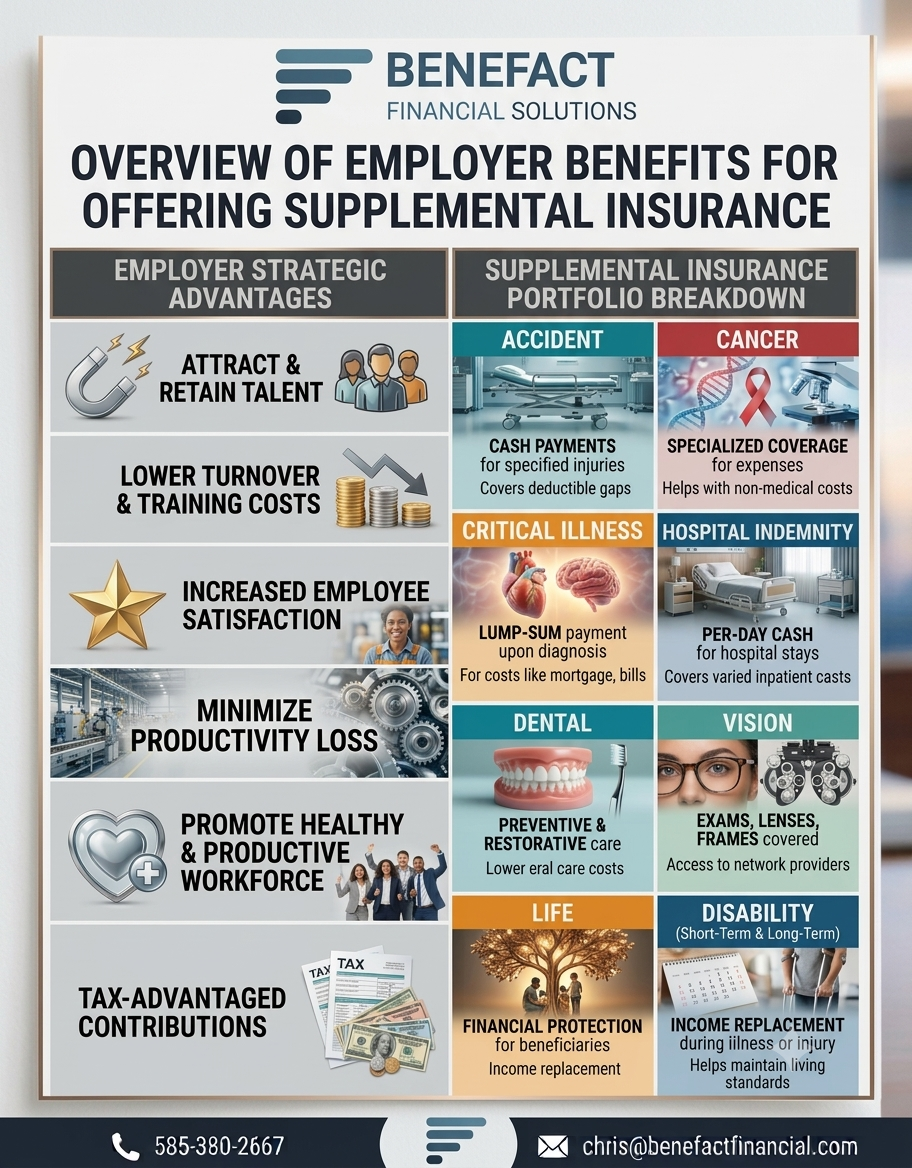
Dental
Routine cleanings, exams, and X-rays, plus help with fillings, root canals, crowns, and bridges. Networks lock in negotiated rates so the out-of-pocket cost stays lower.
Vision
Eye exams at a low copay, and an annual allowance for frames, prescription lenses, and contacts, through a national network of optometrists, ophthalmologists, and retailers.
Accident
Cash for a covered injury: the emergency room, an ambulance, X-rays, fractures, dislocations, and physical therapy. Built to offset a high medical deductible after a fall, a sport, or an ordinary mishap.
Critical illness
A lump sum — for example $10,000, $25,000, or $50,000 and up — paid on the diagnosis of a covered condition such as heart attack, stroke, or organ failure. Spend it on the mortgage, the deductible, or lost income.
Cancer
Coverage aimed at treatment, chemotherapy, radiation, and related care, plus cash that can help with travel, lodging near a treatment center, and household bills while you are in care.
Hospital indemnity
A fixed amount for each day in the hospital, ICU, or a recovery unit. It helps with facility fees, surgery copays, and the ordinary costs a family still has while someone is admitted.
Life
Term or permanent protection so a family can pay off a mortgage, clear debts, and keep a milestone funded. It replaces earnings. See the life insurance page for the full range, including the ages 50–80 whole life quote.
Disability
Short-term and long-term disability replace a percentage of your paycheck if illness, pregnancy, or injury keeps you from working, so the rent, groceries, and utilities continue.
Benefits are paid according to each policy. A diagnosis, an injury, or a hospital stay has to meet that contract. We will show you the trigger before you enroll.